For those of you who look forward to reading my blog and are wondering why my frequency suddenly dropped, I’m recovering from a medical crisis, an unexpected surgery. Doing fairly well now. More stuff to come soon. I promise. Stay well.
Author Archives: dtgriffith
My recent interview with fellow horror author Nerine Dorman
I think it’s time I start interviewing some other writers now, including the awesome and talented Nerine Dorman. I mean that seriously, and not in some pat on a fellow artist’s back kind of thing like you see on the Oscars. Check out this fun interview from her blog, This Is My World. Lots of talk about animals.
This Is My World by Nerine Dorman
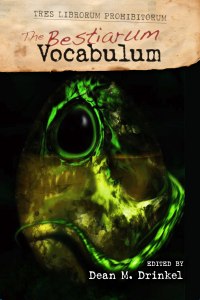 Six of the Best with David Griffith

Today I welcome one of my fellow Bestiarum Vocabulum authors, David Griffith. And sticking with the theme of the anthology, we’re talking about creatures. So, David, what’s your story in the anthology called and what seeded the idea for you?
My story falls under I Is For Imp, titled Ma’s Good Boys. It features an imp named Beazo, a mischievous character I had created in the past, but never knew what to do with him. In my historical research on folklore and religion on the topic of imps, as typically found in hidden in stone carvings in European cathedrals and such, I got the sense they aren’t so much evil as they are just head strong pains in the ass. And that’s precisely what Beazo needed to be.
Read the full interview on Nerine’s site…..
You can purchase this creepy and endearing horror anthology on Amazon: US: http://www.amazon.com/dp/1494375222/
UK: http://www.amazon.co.uk/dp/1494375222/
Just sharing my excitement! I’m currently lined up for three new anthologies scheduled to publish throughout 2014. And I’m laying the groundwork for my first long form book combining the collaborative efforts of some very talented people. More news to come on that project in the near future. So far, 2014 is becoming a great year to look forward to.
Creatives using Adderall and other performance enhancers – what’s the deal?
Hey writers and other creatives – are any of you aware of this new trend of taking Adderall to be better at your disciplines? Take a look at this article, “In search of perfection, young adults turn to Adderall at work” published December 3, 2013 on Al Jazeera America.
Besides the insane idea of using a drug dependency to maintain a leading edge on the competition, what got me was that the interviewed writer claims her work is better as a result of taking Adderall to stay awake all night writing her article. It seems to help her connect to her work. What is her writing baseline otherwise – mediocre work? How does she truly know the work is even better with the drug than without it? Fooling herself with this mythology is more than likely. What gets me, why does she even have a high pressure job writing for the NY Times?
This story, or this epidemic rather, makes me crazy. When I need to perform at a high level, whether in writing, designing, website creation, or whatever else I do, I just put myself in that mindset and do it. Sure, extra caffeine helps stave off the eventual weariness, but I don’t look to performance enhancers to do better at what I already do best.
For the sake of my argument, maybe a bit self-centered on my part, not to intentionally show off, yet it would seem I am, I have been knocking out some end of semester grueling grad school writing while heavily medicated. I had cervical spinal surgery almost two weeks ago, complete with a disc replacement and decompression of my alarmingly compressed spinal cord. The condition was maybe a month or two shy of becoming an emergency situation. I was very lucky to have this situation discovered while checking for another unrelated neurological condition condition just a month ago. Ah, the fun of growing older and degenerative conditions like osteoarthritis setting in to my vertebrae. My point is, I am still performing at my top level, albeit at a slower than normal pace as I fight through the overwhelming need to sleep while I heal, the fuzziness of my thought process throughout most of the day, and the horrendous effects it all has on my typing abilities. But I work through it. And I own it, every bit of it. No excuses.
I know, I’m on a soap box here, and stepping off it now. But I wonder, I am in some way different than others not finding a need to depend on Adderall or other performance enhancers to do my job well, even under conditions of my current ailment?
I’d love get all of your takes on this. I know a lot of you who visit this blog are creatives in varying fashions – several of you are my friends, so I’m on to you 😉 – and have probably encountered in some shape or form people using Adderall or whatever else to get through heavy loads of college work or big job related projects. I’m interested in learning more about this apparent epidemic from first-hand accounts. Don’t leave me hanging, that would be cruel.
On that note, happy holidays as I nod off now.
Article referenced: “In search of perfection, young adults turn to Adderall at work,” Al Jazeera America, December 3, 2013.
The dreaded “full creative freedom”
 “Do whatever you want, you have full creative freedom!“

I cringe when I hear those dreaded words. You should too. No creative ever wants full creative freedom. We need parameters, deadlines, timeline, budgets, brand identity guidelines, licensing guidelines, whatever. You might as well be clearing snow from the tarmac at Liberty International with only a toy beach shovel knowing a 747 could come barreling in from any direction at any moment with no notice. Yes, the idea is really that stress inducing.
So why do I bring this up? Because I’ve heard this probably a billion times now and I bet you have too. It’s not out of malice mind you, it’s not like your manager or the VP way up the line intended to cause you turmoil, they think it’s what you desire. To the outside world, the one thing all of us creatives desire more than anything else – more than a pay raise, recognition for our hard work or a long overdue promotion – is full creative freedom. They can’t be more off the mark.
It’s a simple fact for those not in the know: full creative freedom paralyzes us with fear and anxiety. And that leads to less than desirable execution of the job at hand. And an even less than desirable job performance flag on our annual reviews.
For everyone else in the know trying to curb this problem from damaging your ego and corrupting your portfolio, I offer you these recommendations derived from my many years of trials and tribulations:
1. Ask for parameters, i.e. deadlines, intended goals, all that stuff you need and want to know.
Demand it, set a timeframe for reviews. Confirm the intent of the creative work at hand. When they say, “whatever works for you” tell them tagging your street name on each of the south-facing cubicle walls probably won’t accomplish the goal. Fun, yes!
2. Be polite and respectful, but don’t be a doormat.
It’s easy to feel compelled to say yes to everything the boss tells you. The reality is, saying yes to everything creates two problems: 1. you take on more work than you can or should handle for the timeframe; and 2. you become the go-to-guy for doing all the garbage work because no one expects you to say no. Bottom line: learn to say no, respectfully, and for valid reasons. Most importantly, don’t be pompous about it.
3. Be honest.
Tell the boss that full creative freedom is much too broad and therefore vague. She or he should appreciate this perspective, most likely having to endure a similar matter in their own job history. Honesty goes a long way in the professional world, and is often appreciated and admired.
4. Don’t bitch and complain to your co-workers about the burden you allowed yourself to take on.
First, if you allowed it to happen, you have no one to blame but yourself. Suck it up, deal with it. Don’t complain. Secondly, if you do complain to your peers, guess what? Rumors spread, faster than that blood rush to your head during that dare to hang from the hotel balcony by your feet at Spring Break. No, I never did that, I just had to create a far-fetched scenario to make sure you’re paying attention. Point is: follow the first three steps and this fourth will not need to apply. You’re a smart person, do the right thing.
Whether you follow my advice is your ultimate decision. I share it based on a career’s worth of successes and mistakes made in the creative field. And my goal is to help you, the reader, learn from my experiences. All I ask is that you accept or decline what I have to offer with respect and dignity. I wish you all success in your creative endeavors, and to pay it forward.
Good luck.
 D.T. Griffith