A Semi-Subconscious Self Portrait

Drawing inspiration from the mundane, regular, everyday type of stuff that surrounds us; average, unnoticed, omnipresent. That’s where I find the strange, the scary, the peculiar, the horrific. Much like the carnival sideshows of decades past, showcasing oddities and mysteries, my brain is both spectator and showman when I write. That sounds so esoteric and pompous, I suppose, so ridiculous yet it defines my creative process. I can only be egalitarian to a point, as far as my humble nature allows before I fall victim to self-induced humility and fall into that downward spiral that is routine nature.

Somehow, this rambling makes sense to my subconscious and my ego is enthralled. One day I may learn a thing or two from my subconscious, the distant world where all of my creativity stems from. It’s the well-fertilized part of my being, complete with a robust composting system providing nourishment and enrichment.

Confused? Me too, maybe to a lesser degree. This is my brain in raw action, after all, translated into words that a reader can understand.

Otherwise, if my mind was to get with the program, the doldrums of everyday work and life becomes the routine norm where innovation is scoffed at and free expression is shunned. The thick skin of humility blockades the acceptance of compliments, accolades, and accomplishments. We accept only what we have been taught in school about being nothing more than a number in the system, a little cog in a great machine, the pawn the corporation sees as expendable and thrown into the basement to work next to the boiler room. These things really happen, some figuratively, some literally, others fictional. You get the point. I think.

Finding Closure

Sandy’s leftover clouds in Massachusetts
Find me on Instagram: dtgriffith

I finally found a way to close a story that has been alive and with me – in the developmental sense – for fifteen months. It’s the longest, most complex story I have ever written, still qualifying as a short story or novella, depending on who’s rules you follow. It really makes no difference to me. The challenge was whether I wanted the protagonist to redeem herself, to live to see another story, despite her horrific actions and questionable behavior. My final answer: a resounding yes.

It’s amazing how vested I became with the character. I’ve heard of authors who take on extraordinary experiences to get inside a character’s head and comprehend their wisdom. I wonder how often writers find themselves questioning the fate of their characters, do they decide to kill their darlings or give them a second chance?

Series obviously allow a main character to live on, otherwise they wouldn’t work, unless there is something out there I don’t know about. Whatever the case, an entire industry of fiction based franchises exists for this reason alone. I’m not necessarily out to accomplish this, however. But I wouldn’t complain if I found myself there one day. Perhaps I am nascent, having been out of the writing loop for several years to focus on my initial visual arts career and start a family. It doesn’t matter, in the grand scheme, as my rugged individualist nature leads me down the path of nonconformity.

So back to this idea of finding closure. It’s not true closure, per se, it’s a turning point. An opportunity to end one chapter to begin the next. I know, not a profound thought, but authentic nonetheless. Closure of a storyline is more important for the audience, no one likes to be strung along and left hanging as the story ends. I hate when this happens to me as a reader or movie watcher. Closure is an obligation to the reader, so the author’s career may live to see another day.

Here I am, running in circles with these recent blog posts, finding all roads lead to Rome, so to speak. Finding closure is in line with my self-exploration in fighting creative fear and writing for the reader. So, why I am writing this? Besides the catharsis it provides to get it all out there, I’m thinking maybe others will realize they are not along in their struggles as they endeavor to be masters of the craft. If nothing else, it’s a small contribution I am happy to offer.

How many clichés can you count in this post? It surprises me how easy they are to write when not thinking about it, but that’s for another blog entry another day.

Writing for the Reader in Me

I have heard countless times since returning to writing and pursuing my MFA degree “write for yourself.” Coming from the profession I have spent my whole career in, the target audience has always been the first influence on work I have created. So the reader, naturally, is someone I want to write for, never mind the fact that I don’t know many of my readers – if there are even many outside of this blog.

Every writer must have experienced the exhilaration of reading their own work after some time has passed at least once. It’s like a whole other person produced it; a deliberate subconscious separation to a completed story that allows the writer to read it for the first time. It’s a beautiful thing.

Since I don’t have a specified audience for fiction in this embryonic stage, I write about subjects that excite and interest me, maybe scare me, and often stuff I want to learn more about. For example, I have never worked in a circus or government office, so a character I create may be campaigning for a local office or a veteran sideshow performer.

Then there is that old adage “write what you know,” which I do fair amount of. Thing is, some of what I know isn’t necessarily based on first-hand experience, some of it is observational and intuitive. I was never a patient in a psychiatric hospital nor have I committed a murder, but pulling from what I know about these subjects based on research and observation, I can place my head in those spaces and become those flawed characters, in the figurative sense. I know how they think and feel, whether they are rational or irrational, what they base their decisions on. They become real live humans in my brain and on the page. This is probably normal for any writer, perhaps all creative-types; I don’t know, I never asked. Whatever the case, it’s part of my writer’s tool box.

So I write for myself now with the intention that other people of similar mind and dysfunction will appreciate it – maybe even love it! It’s working out so far with another short story this year due to publish soon in an anthology about demons.

Tell me about you. I’m always interested in learning how others think about these topics. Do you write or create for yourself or others? Do you become your characters who deviate widely from your real life?

Happy November!

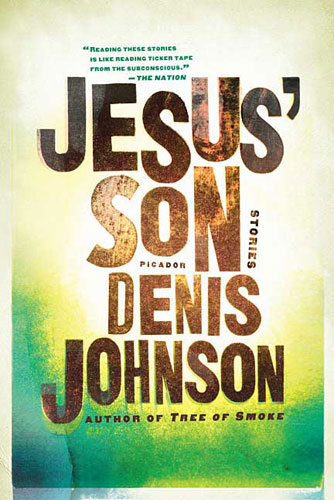
Writing Craft: Jesus’ Son by Denis Johnson

The collection of short stories of Jesus’ Son is something of a paradox. The graceful and poetic language portrays dark and depressing situations occupied by people at their lowest points performing despicable acts. Fluid and sensuous prose carry the narrative forward effortlessly; the time it takes to read the book becomes irrelevant. This was my first time reading Denis Johnson’s work, and not knowing anything about him, I wondered if these vivid stories were pulled from real-life experiences. Either way, I was captivated.

Johnson makes a hospital orderly moving through his day in the story “Emergency” on a drug high sound warm and simple. He seemed to have reached a heightened state of bliss among a bleak and stressful world, while the dire risks of his actions were always prevalent.

Everybody had a different idea about exactly how to approach the problem of removing the knife from Terrence Weber’s brain. But when Georgie came in from prepping the patient—from shaving the patient’s eyebrow and disinfecting the area around the wound, and so on—he seemed to be holding the hunting knife in his left hand. (Loc. 694-696)

Duality is consistently portrayed in an illustrative storytelling motif throughout the stories through an inebriated perception of people and self, and their relationships to the environment. This is a polar extreme to the clichéd my head felt like a balloon and floated from my body and over the green pastures type of hack:

Under Midwestern clouds like great grey brains we left the superhighway with a drifting sensation and entered Kansas City’s rush hour with a sensation of running aground. (Loc. 39-40)

It was a long straight road through dry fields as far as a person could see. You’d think the sky didn’t have any air in it, and the earth was made of paper. Rather than moving, we were just getting smaller and smaller. (Loc. 451-453)

All senses are engaged. Johnson places the reader in the environment through deliberate figurative prose. Landscape description appear frequently, along with the integration of nature, setting the tone of the immediate physical world and then on a higher existential level consistent with the protagonist’s thought process. Consider these examples:

The road we were lost on cut straight through the middle of the world. It was still daytime, but the sun had no more power than an ornament or a sponge. In this light the truck’s hood, which had been bright orange, had turned a deep blue. (Loc. 753-754) 

What word can be uttered about those fields? She stood in the middle of them as on a high mountain, with her red hair pulled out sideways by the wind, around her the green and grey plains pressed down flat, and all the grasses of Iowa whistling one note. (Loc. 567-568)

Descriptions of settings often take on a stream of consciousness quality through the protagonist’s altered perceptions while incorporating actions and people as part of the holistic environment. In this way, Johnson effectively animates common activities like riding on a ferryboat or a subway train:

The day was sunny, unusual for the Northwest Coast. I’m sure we were all feeling blessed on this ferryboat among the humps of very green—in the sunlight almost coolly burning, like phosphorus—islands, and the water of inlets winking in the sincere light of day, under a sky as blue and brainless as the love of God, despite the smell, the slight, dreamy suffocation, of some kind of petroleum-based compound used to seal the deck’s seams. (Loc. 1000-1003)

I sat up front. Right beside me was the little cubicle filled with the driver. You could feel him materializing and dematerializing in there. In the darkness under the universe it didn’t matter that the driver was a blind man. He felt the future with his face. And suddenly the train hushed as if the wind had been kicked out of it, and we came into the evening again.(Loc. 948-951)

People are treated in a similar descriptive manner giving them identifiable realistic traits leaving no room to question their authenticity:

He stood hugging himself and talking down at the earth. The wind lifted and dropped her long red hair. She was about forty, with a bloodless, waterlogged beauty. I guessed Wayne was the storm that had stranded her here. (Loc. 560-561) 

He walked with a bounce, his shoulders looped and his chin scooping forward rhythmically. He didn’t look right or left. I supposed he’d walked this route twelve thousand times. He didn’t sense or feel me following half a block behind him. (Loc. 920-921)

I found the following quote in “Happy Hour” fitting to wrap up my take on Jesus’ Son. By intention or not it seems Johnson was poking fun at the style of his writing and its juxtaposition to the subject matter:

I stayed in the library, crushed breathless by the smoldering power of all those words—many of them unfathomable—until Happy Hour. And then I left. (Loc. 1147-1148) 

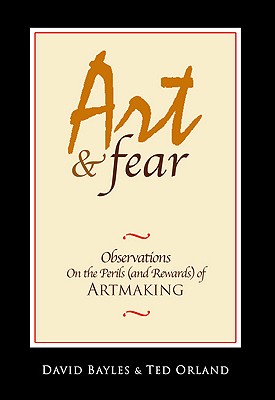
Art & Fear hit home

I wrote this response to Art & Fear: Observations on the Perils (and Rewards) of Artmaking by David Bayles and Ted Orland in January 2012 as part of my MFA Writing studies. Reading through it tonight I felt it was worth sharing on the blog. It’s quite autobiographical and contains a few lessons in self-awareness and self-acceptance that anyone in a creative field must work through and overcome.

* * * 


Art & Fear is a fascinating book touching on several points throughout my professional and personal life. It has stirred up many thoughts and emotions, evoking memories of my artistic roots and where I find myself now, questioning my seemingly unorthodox path from aspiring artist to corporate communicator.

I have always been involved in the arts. Before I was ten I had already decided I would be an artist when I grew up. By the time I was in college I already had several years experience in making art: played guitar in rock bands, painted with oils, wrote short stories, wrote and performed at poetry slams, and shot, developed, and printed black and white 35 mm film. These passionate endeavors led to my pursuit of a BFA as a Fine Art major with the predetermined career path to become a professional artist.

The harsh reality hit shortly after graduation. Within a few months it became clear that digital media was replacing the traditional methods at a rapid rate. The local freelance creative job market was intensely competitive. Having found I was adept at using Photoshop I launched my career as a digital photo-retoucher building off my traditional education in painting and photography. Not quite the fine artist pursuit, but it satisfied my creative urges and paid the bills. Digital graphic design soon followed as I continued to expand my capabilities, eventually leading to web design and development.

It was never easy; I found myself stopping some of my much beloved creative disciplines, particularly writing and music, to focus my energies on becoming the best digital artist possible with no formal training in new media. Fortunately, in recent years writing has made a surprising re-entry in my life, now playing a dominant part of my profession.

Early in the book, the authors of Art & Fear explain the grim reality that ninety-eight percent of graduates with art degrees are set up to fail. A lack of preparation and education on the business of artmaking tends to be a problem in the art schools – it certainly was when I was a student. Art is an accepted profession in our country, but not an accepted occupation. As Bayles and Orland vividly point out, “if ninety-eight percent of our medical students were no longer practicing medicine five years after graduation, there would be a Senate investigation.” (11). I know too many such art grads who have failed in their artistic careers soon after college. Talented individuals who did not know how to make a living as artists, who did not know the right people at the right times, who did not know how to apply their talents and skills to a tangential profession outside of their comfort zone. Looking back it seems I was one of the fortunate few.

So here I am fifteen years later, as a web designer, as a business writer, as a professional communicator, I have never once deviated from the creative path I set out on in my teens. But I cannot call myself an artist. I have not primed a hand-stretched canvas or pressed an intaglio print in several years, but the knowledge of color, texture, form, composition, and storytelling is carried with me in the communication work I produce today. Writing a strategy requires a great deal of creative thinking, in both the over-arching concepts and the tactics to implement it. Creating a website is a multidisciplinary task involving skills in writing, design, user experience, and technology. Why should these sorts of works disqualify me from being an artist? I never technically quit; I evolved.

However, Bayles and Orland do write, “For most artists, making good art depends upon making lots of art, and any device that carries the first brushstroke to the next blank canvas has tangible, practical value.” (61) Any device … has tangible, practical value caught my attention, as in the medium and method do not matter as long as the artistic intent is there. Have I been an artist all along?

I have found myself in this gray area throughout my career. When I am asked what I studied in school, my answer is naturally fine art, and I get the funny look. How did I get here from there? Did I throw away my education and sell out? Of course not, I applied everything from my fine arts education to become what I am today, whatever that label might be.

Ultimately, what this book instilled in me was self-acceptance. I understand where I came from is not so unique; many aspiring artists have traveled this path. I am getting over the fear of calling myself an artist, a writer, or any other creative title. As long as I am true to myself, in my corporate communication job, or in my revitalized interest of becoming a professional writer, no one can take that away from me despite his or her level of acceptance or understanding. And I can live with that.