New published work coming in 2014

It has been quite a while since I wrote a blog entry. Life has been extremely busy with finishing my graduate degree in May, the ongoing needs my daughter’s medical, and a series of changes (all good) occurring at my job since returning from my medical hiatus about four months ago.

Many topics have circulated in my brain to write about for blogs, essays, and short stories, but I decided to spend my down time this month losing myself in the game Grand Theft Auto V for a few weeks, something I haven’t done in several years. That badly needed mental vacation of exaggerated cartoon violence and dark comedy helped me break out of the grad student mentality and refocus on my writing priorities for this summer. I did take obsessive notes on all of those ideas, though, so nothing was lost.

I am excited to share news on a few new publications I’m involved in, coming out during the latter half of 2014.
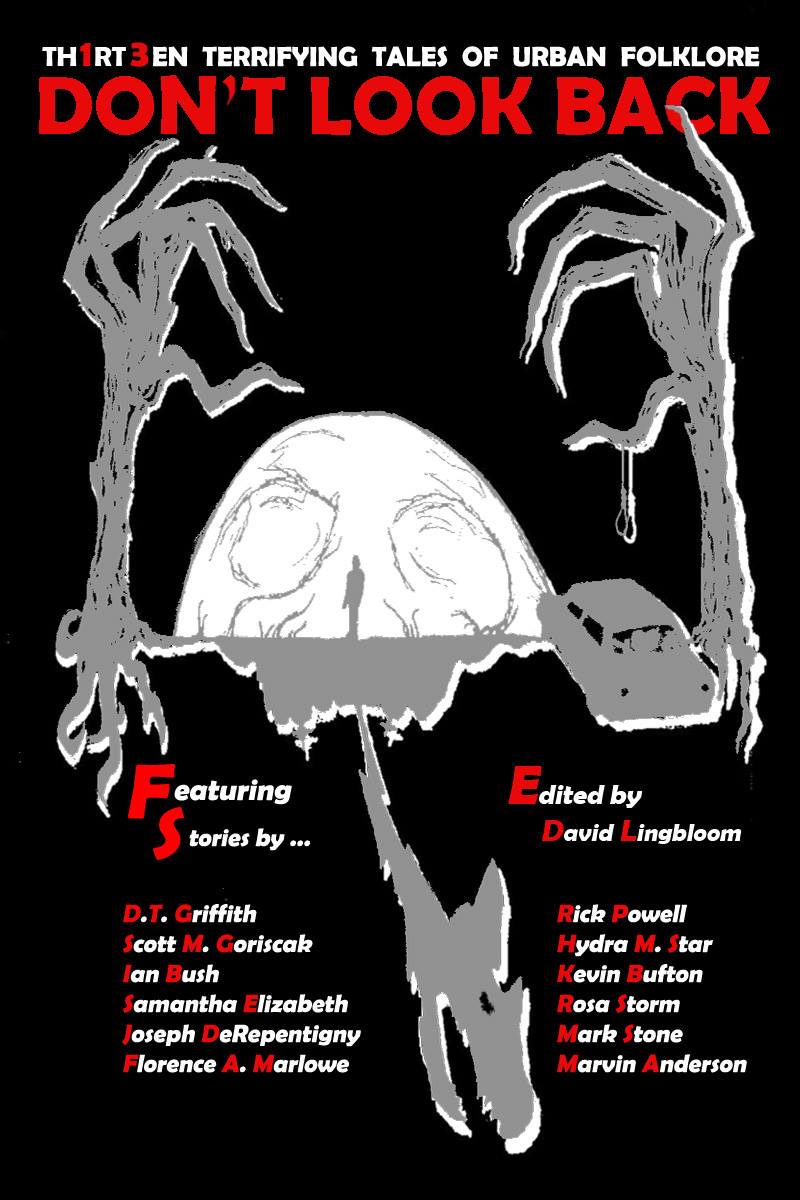
Don't Look Back coverI wrote the story “The Elusive Pettibone” for the anthology Don’t Look Back, edited by David Lingbloom. The story is my take on the origin of the White Lady of Union Cemetery in Easton, Connecticut. It was fun to write, exploring the historical aspects and reported ghost stories of a locality near home.

I found myself deeply invested in the protagonist I created for the story, Angela Pettibone, an emotional development that I have not experienced with other stories or characters I’ve created. The legends of the White Lady’s wanderings along the roads of Easton between two cemeteries were a shared interest with my late younger brother. Looking back, this is a story I know he would have loved. Therefore, I have dedicate the story in his memory.

Don’t Look Back is due out this fall from Dark Moon Press. I will share purchasing details once available.

Phobophobias cover 01Next up is the much anticipated anthology Phobophobias from Dark Continents Publishing, edited by Dean Drinkel, which contains another story set in Connecticut, “U is for Ufophobia: Streaks of Green.” The current-day story follows a young woman refusing to hide from an otherworldly occurrence that has the state on lockdown. Inspired by an unapologetic mid-20th century noir story, it tackles the issue of living life in spite of the constant state of terror and confusion created by the unknown. Phobophobias is expected to arrive in August.

Lastly, I am editing my first episodic novel, a collection of linked stories following the disturbing and eventful life of a young woman named Lanie, The Dystopian American. The author line up includes a strong mix of emerging talents and accomplished dark fiction writers from the indie scene. Reading through the first drafts of material I feel confident that we have a strong book in the making. It’s a little early to share details now, I will post more about it when appropriate.

More to come as I have details to share.

My recent interview with fellow horror author Nerine Dorman

I think it’s time I start interviewing some other writers now, including the awesome and talented Nerine Dorman. I mean that seriously, and not in some pat on a fellow artist’s back kind of thing like you see on the Oscars. Check out this fun interview from her blog, This Is My World. Lots of talk about animals.

This Is My World by Nerine Dorman

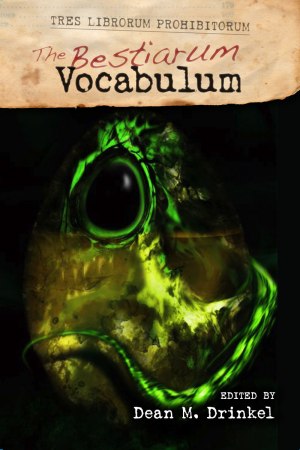
The Bestiarum VocabulumSix of the Best with David Griffith

Today I welcome one of my fellow Bestiarum Vocabulum authors, David Griffith. And sticking with the theme of the anthology, we’re talking about creatures. So, David, what’s your story in the anthology called and what seeded the idea for you?

My story falls under I Is For Imp, titled Ma’s Good Boys. It features an imp named Beazo, a mischievous character I had created in the past, but never knew what to do with him. In my historical research on folklore and religion on the topic of imps, as typically found in hidden in stone carvings in European cathedrals and such, I got the sense they aren’t so much evil as they are just head strong pains in the ass. And that’s precisely what Beazo needed to be.

Read the full interview on Nerine’s site…..

You can purchase this creepy and endearing horror anthology on Amazon: US: http://www.amazon.com/dp/1494375222/
UK: http://www.amazon.co.uk/dp/1494375222/

My latest story unleashed: Ma’s Good Boys

The Bestiarum Vocabulum edited by Dean M. Drinkel

The Bestiarum Vocabulum edited by Dean M. Drinkel, cover illustration by James Powell

So I thought I would write a proper post abut this new published story, “Ma’s Good Boys.” It falls under the header “I Is For Imp” in the new anthology The Bestiarum Vocabulum, edited by Dean M. Drinkel, published by Western Legends.

“Ma’s Good Boys” follows a day in the life of one tragic George D. Giovanni, not just a good son, but a great son to his late mother, bless her soul. A series of jolting revelations are suddenly sprung on him as a little imp appears in the house he inherited from Ma and causes all sorts of mischief.

This story was a lot of fun to write, mixing elements of horror, humor, and absurdist scenarios. I hope readers will enjoy it as much as I did creating it.

Check out this list of authors, including some Hellraiser and Star Wars alumni, among new and established masters of horror:

Emile-Louis Tomas Jouvet, Jan Edwards, Martin Roberts, Lisa Jenkins, Peter Mark May, Raven Dane, Joe Mynhardt, Rakie Keig, D.T. Griffith, Mark West, John Palisano, Amelia Mangan, Robert Walker, Christine Dougherty, Tim Dry, Nerine Dorman, Dean M. Drinkel, Christine Morgan, Tej Turner, D.M. Youngquist, Jason D. Brawn, Lily Childs, Andy Taylor, Sandra Norval, Adrian Chamberlin, and Barbie Wilde.

You can find it for sale on Amazon at the following links:

Amazon US: Paperback | Kindle  •  Amazon UK: Paperback | Kindle

More info on the book can be found here on Western Legends Publishing.

On writing in business: 5 Steps to avoiding tone-deaf emails

going 2 lunchSince I’ve been writing about work-related communications on this blog lately, I thought I would touch on a subject that makes my teeth hurt – tone-deaf emails. Now I know the proper usage and definition of tone-deaf, but I find its concept applicable to this subject on a multidimensional scale.

Tone-deaf emails are simply emails written with a total disregard to the tone, or emotion, the message conveys. I have received a lot of them in my professional life, I’m sure you have too. There are the gratuitously angry messages like, “you NEED to do this NOW!!!” in the subject line with a blank body. And there are the five words or less messages like “thanks – got it” or “can you do it????” They seem harmless enough, but consider receiving them several times an hour – all day every day. The sheer quantity of these simple messages adds up to piles of resentment and gnawing frustration as a complete lack of humanity grows apparent.

We all need humanity in our relationships with other people; communication, emails included, is a critical element in all relationships. But you already know this. Thing is, this applies to business relationships too, they are no less valuable than one with a spouse, child, or parent. So why treat business relationships as lesser status?

Here are five steps that should take up residence in your subconscious to avoid being tone-deaf in your work emails.

1. Mood is everything.

Think about the emails that piss you off. You feel like the sender is a nasty, ego-centric ogre who shows no gratitude or respect for your valuable time. These emails suck. They throw off your mood. Don’t be one of these tone-deaf senders. Don’t be an ogre.

The solution is actually quite easy, it just requires care and attention to detail, and an extra minute of your time for review, to avoid a tenure of acrimony. Start by maintaining professionalism. Be cheerful if appropriate, but don’t ever spew anger or frustration in an email. Simply stated, be nice and respectful. Even if it’s to communicate a negative topic. It makes the recipient more likely to cooperate rather than throw a chair at your head at the next meeting.

2. Timing is everything too.

You have full control over the time when composing an email. There is no prize for clicking that send button quickly. Save a draft for later if you’re in a hurry. Review, revise, and edit what you wrote, you can avoid mistakes that would otherwise lead to several back-and-forth question and answer sessions clarifying what you originally wrote – how annoying is that? I’ve seen it happen to people I work with, it becomes stressful on both ends.

3. Be decisive.

It’s incredibly unnecessary to include your thought and decision-making processes. No one wants or needs to read, “hmmmmmm … let me think about this … maybe … not sure … well, okay …… yeah … let’s go with it.” Be decisive and direct, leave out the garbage.

4. Brevity counts, but only if it’s clear.

Like my examples in the introduction, those five words or less messages can lead to many questions wasting a lot of time. “That project from a few weeks back – status?” does not accomplish clarity, especially when considering the average person has several concurrent projects at any given time. Going back to mood, it’s easy to be ambiguous. What you may consider a good-natured message may come across as negative to a recipient who is having a bad day.

Keeping it short is fine, generally a good thing, but be specific in message and mood. Humanity matters here.

5. Good grammar and punctuation shows you care.

Just like good manners at the dinner table, good grammar and proper use of punctuation show you care about what you do, that you care about others, and how you want to be perceived. Sadly, I see a serious decline in all forms of online and digital communication. I cringe at ninety percent of the content I see on Twitter and Facebook.

There are thousands of articles on this topic available online, so all I will say is this: think about how you want others to see yourself before sending a message like: “Hey, r u going 2 lunch at 1??? Ill prolly b late.”

Take a minute to look at what you wrote before hitting send.

It’s the difference between being a good communicator or a tone-deaf pejorative you don’t want people calling you behind your back.

On writing: what good comes from fiction?

Since the early 1990s, I have occasionally stumbled across the notion that reading fiction is a waste of time. I remember seeing a hair metal rocker in an MTV interview back then proclaiming this frivolous statement. You would think this concept was profound by the attention it was given during the “news” segment. I can’t even recall who the musician was, guess it wasn’t all that big a deal.

More recently, however, Noel Gallagher of Oasis echoed a similar time-wasting sentiment in an interview for GQ’s Icon of the Year. You can see an article about this in The Guardian here. Is it trendy for some celebrities to make this unnecessarily stupid statement? I have yet to see a legitimate reason to defend this point. At best, it promotes his pompous arrogance. It begs the question why GQ deemed Gallagher worthy of such a prestigious title; he’s certainly on track to become a Nobel Laureate.

I understand some people prefer reading nonfiction over fiction just as others prefer the inverse – I get that. I don’t argue personal preference and I don’t pass judgment either way. I enjoy reading both and writing both. So be it. But the public proclamation of fiction as a waste of time sucks the marrow from my bones as a giant mosquito would if given the opportunity. It’s far more than just stating a personal preference when delivered to a mass media outlet.

For those who don’t see the point of fiction, I offer you these groundbreaking thoughts. And yes, they are opinions, rooted in observations, professional experience, and most importantly, common knowledge. Only a narcissist would be oblivious.

Fiction provides escape. 

For some it’s a journey into another world. For others, it’s the opportunity to live out a fantasy while ignoring the day’s real life stress. There’s no magic here, it should be obvious even to the most cynical bastard.

Fiction is ubiquitous.

I wonder if the people claiming fiction is a waste enjoy TV dramas, art galleries, blockbuster movies, or even stand-up comedy. Even when based on facts there are elements of fiction throughout these media. How many Civil War documentaries feature audio clips of Abraham Lincoln’s words of wisdom? Voiced by actors, of course. As for the gaps between recorded events, writers have to surmise what probably had occurred to connect the dots – fiction based on fact.

 Fiction excites the mind. 

An amazing side affect of reading fiction is that it inspires. It can invoke creativity. Especially for children. Concepts in science fiction haves opened the way to real life inventiveness, bringing to the world submarines and helicopters. Check out this Smithsonian.com article if you don’t believe me. Star Trek fans relish in this fact considering the number of inventions the original TV show inspired.

Fiction is the livelihood for many people.

Whether we are talking about novelists, publishers, or filmmakers, fiction is at the root of many Americans’ livelihood. It’s an industry no less legitimate than music.

Fiction is this or that….

Anyone can spend a few minutes on this topic and come up with a list. My point is this: don’t berate fiction because it’s not your cup of tea, even if your cup of tea contains sulfuric acid and bleach. No one enjoys hearing of their life’s passion proclaimed a waste of time. Not even formerly celebrated musicians.