Add to your Halloween reading: Unnatural Tales of the Jackalope

It’s the season for all things dark, scary, and fun. If you haven’t already done so, please consider adding our crazy book to your reading list. Help support a bunch of indie writers by purchasing Unnatural Tales of the Jackalope, a short story anthology filled with horror, dark humor, and intrigue, from Western Legends Publishing. You won’t be sorry. It includes my short story “Johnny Versus the Creatures.”

Amazon: http://amzn.com/1477451919

Western Legends: http://westernlegendspublishing.com/ 

Art & Fear hit home

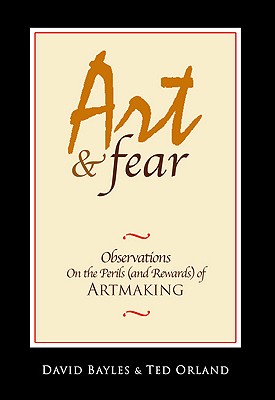
I wrote this response to Art & Fear: Observations on the Perils (and Rewards) of Artmaking by David Bayles and Ted Orland in January 2012 as part of my MFA Writing studies. Reading through it tonight I felt it was worth sharing on the blog. It’s quite autobiographical and contains a few lessons in self-awareness and self-acceptance that anyone in a creative field must work through and overcome.

* * * 


Art & Fear is a fascinating book touching on several points throughout my professional and personal life. It has stirred up many thoughts and emotions, evoking memories of my artistic roots and where I find myself now, questioning my seemingly unorthodox path from aspiring artist to corporate communicator.

I have always been involved in the arts. Before I was ten I had already decided I would be an artist when I grew up. By the time I was in college I already had several years experience in making art: played guitar in rock bands, painted with oils, wrote short stories, wrote and performed at poetry slams, and shot, developed, and printed black and white 35 mm film. These passionate endeavors led to my pursuit of a BFA as a Fine Art major with the predetermined career path to become a professional artist.

The harsh reality hit shortly after graduation. Within a few months it became clear that digital media was replacing the traditional methods at a rapid rate. The local freelance creative job market was intensely competitive. Having found I was adept at using Photoshop I launched my career as a digital photo-retoucher building off my traditional education in painting and photography. Not quite the fine artist pursuit, but it satisfied my creative urges and paid the bills. Digital graphic design soon followed as I continued to expand my capabilities, eventually leading to web design and development.

It was never easy; I found myself stopping some of my much beloved creative disciplines, particularly writing and music, to focus my energies on becoming the best digital artist possible with no formal training in new media. Fortunately, in recent years writing has made a surprising re-entry in my life, now playing a dominant part of my profession.

Early in the book, the authors of Art & Fear explain the grim reality that ninety-eight percent of graduates with art degrees are set up to fail. A lack of preparation and education on the business of artmaking tends to be a problem in the art schools – it certainly was when I was a student. Art is an accepted profession in our country, but not an accepted occupation. As Bayles and Orland vividly point out, “if ninety-eight percent of our medical students were no longer practicing medicine five years after graduation, there would be a Senate investigation.” (11). I know too many such art grads who have failed in their artistic careers soon after college. Talented individuals who did not know how to make a living as artists, who did not know the right people at the right times, who did not know how to apply their talents and skills to a tangential profession outside of their comfort zone. Looking back it seems I was one of the fortunate few.

So here I am fifteen years later, as a web designer, as a business writer, as a professional communicator, I have never once deviated from the creative path I set out on in my teens. But I cannot call myself an artist. I have not primed a hand-stretched canvas or pressed an intaglio print in several years, but the knowledge of color, texture, form, composition, and storytelling is carried with me in the communication work I produce today. Writing a strategy requires a great deal of creative thinking, in both the over-arching concepts and the tactics to implement it. Creating a website is a multidisciplinary task involving skills in writing, design, user experience, and technology. Why should these sorts of works disqualify me from being an artist? I never technically quit; I evolved.

However, Bayles and Orland do write, “For most artists, making good art depends upon making lots of art, and any device that carries the first brushstroke to the next blank canvas has tangible, practical value.” (61) Any device … has tangible, practical value caught my attention, as in the medium and method do not matter as long as the artistic intent is there. Have I been an artist all along?

I have found myself in this gray area throughout my career. When I am asked what I studied in school, my answer is naturally fine art, and I get the funny look. How did I get here from there? Did I throw away my education and sell out? Of course not, I applied everything from my fine arts education to become what I am today, whatever that label might be.

Ultimately, what this book instilled in me was self-acceptance. I understand where I came from is not so unique; many aspiring artists have traveled this path. I am getting over the fear of calling myself an artist, a writer, or any other creative title. As long as I am true to myself, in my corporate communication job, or in my revitalized interest of becoming a professional writer, no one can take that away from me despite his or her level of acceptance or understanding. And I can live with that.

Revision in Everyday Life

One of my Instagram shots.
the author of this flyer didn’t bother to proof read the headline.

It always surprises me how often I will come across writing in the professional and academic world that has not been thoroughly revised. I recall when I was in high school and college I had peers who were all about the one-and-done mentality, first draft purists, if you will, acting as if a second draft was infringing on their creative freedom and raw genius. I knew a girl who wrote poetry in high school, who would write poems on random sheets of paper in rough form and just leave them around the house to find and read at another time. I suggested to her that she collect the poems into a book and develop them – no, that would have ruined her creative process, I was told in some roundabout way.

A few weeks ago, I found myself explaining to my daughter, now in eighth grade, the importance of revision while helping her with homework. It’s a funny thing with her, she has raw writing talent, it appeared at a very young age, but she refuses to believe she is good at it and voices how she “hates it.” Thing is, after walking her through a few revision steps to help her with some creative and essay writing assignments for which revision was required, she was excited about the work she produced. She loved it as she read it aloud to my wife and me! Then she quickly moved on to some other non-related topic as thirteen-year-olds often do. I look forward to the day when she realizes her intrinsic talent in this area and enjoys it.

I’m not one to preach, but I will share this advice with anyone willing to listen. Revision is a strong tool not to be ignored, even if you are writing an email at work. Ever notice some emails from co-workers are written so well that they are short and to the point, you understand what the sender is communicating without effort and even feel that person’s mood come through? It’s a beautiful thing; anyone can pull it off with the slightest effort. Unfortunately, what I see more often than not are messages typed in a hurry filled with misspellings, texting-style shortcuts and ambiguity, sometimes responding with a single word answer to a series of questions with no clarity as to which question has been answered. This of course necessitates follow-up questions and turns into a lot of wasted back-and-forth time that could have been prevented by sending a clear message in the first place. The key: proofread what you wrote and revise as necessary, it doesn’t take long to do. And the larger scale the communication, the more critical this step becomes.

I know old habits dies hard, people are stuck in their ways. I get all that. But consider the simple tool of revision in your daily life as a way to help you get ahead and not waste your valuable time.

Writing Craft: Defining Noir

I love noir. It contains or shares elements of various genres I am drawn to and tend to write in, like disturbed and unusual psychological issues, dystopian themes, hard-boiled character-driven drama, brutal honesty, and gritty realism when it comes to the human condition. I selected several stories from The Best American Noir of the Century, a 731-page short story anthology edited by James Ellroy and Otto Penzler, for this craft-base blog entry.

The anthology is filled with so many great authors and stories I had a hard time deciding where to begin. As the anthology is assembled chronologically by publishing dates, I settled on the earliest works, ranging from 1923 to 1952, to determine what common threads exist between these various stories that classify them as noir. Otto Penzler explains in the Foreword, “noir … is virtually impossible to define, but everyone thinks they know it when they see it. Like many other certainties, it is often wildly inaccurate.” I love this fact about this genre. Its definition seems to reside somewhere in our collective subconscious, an area where the darker side of humanity dwells and occasionally surfaces to disrupt everyday life. Penzler finished the Foreword by saying, “If you find light and hilarity in these pages, I strongly recommend a visit to a mental health professional.” I wouldn’t say I found anything light and hilarious, but I was fascinated by these stories.

Penzler’s statements issued a challenge: what defines noir and makes it so appealing? After reading the stories from Tod Robbins, James M. Cain, Steve Fisher, MacKinlay Kantor, Day Keene, Dorothy B. Hughes, Howard Browne, and Mickey Spillane, the common thread I found was a casual attitude toward death: either the thoughts of killing, driving someone to suicide, or following through with emotionally charged murder, with or without remorse.

In Tod Robbins’s “Spurs,” the short story that was the basis for the controversial 1933 film Freaks, Jacques Courbé, a seemingly harmless circus-performing dwarf, is capable of breaking his wife’s vitality and spirit in exchange for her teasing during their circus wedding and subsequent plans for his wealth. The beautiful, strong, and talented Jeanne Marie only married him for his inherited fortune, he quickly found out. She found him to be a joke as she was determined to keep him at bay and eventually cause his death and take ownership of his inheritance. A year after marriage when the circus was back in town, Jeanne Marie runs to the aid of her old boyfriend the charming bareback rider Simon Lafleur, the “circus Romeo,” to whom she planned to return to after Courbé was dead. Courbé, with the help of his wolf-dog companion whom was also his performance partner and mode of transportation, tracked them down and killed Lafleur.

M. Jaques Courbé cleansed his sword on a kerchief of lace, dismounted, and approached Jeanne Marie. She was still crouching on the floor, her eyes closed, her head held tightly between both hands. The dwarf touched her imperiously on the broad shoulder which had so often carried him.
“Madame,” he said, “we now can return home. You must be more careful hereafter. Ma foi, it is an ungentlemanly business cutting the throats of stable boys!”

In the 1946 story “The Homecoming,” by Dorothy B. Hughes, a strong jealous rage causes the protagonist, Benny, to kill his girlfriend Nan and an old war hero boyfriend who visits her after returning home from Korea. The whole story is focused on Benny’s jealously of Jim, the celebrated war hero and popular kid from high school, as he walks to Nan’s home, climaxing in their unintended deaths. At least he thought the murders were unintentional, despite carrying a gun to the home with the intention to put Jim in his place.

There were lights in most of the houses. You’d think the neighbors would have heard all the noise. Would have come running out to see what was going on. They probably thought it was the radio.

They should have come. If they had come, they’d have stopped him. He didn’t want to kill anyone. He didn’t want even to kill Jim. Just to scare him off. Just give him a scare.

She couldn’t be dead. She couldn’t be, she couldn’t be, she couldn’t be. He sobbed the words into the wind and the dark and the dead brown leaves.

Mickey Spillane’s 1953 story “The Lady Says Die!” portrays a story of a wildly successful Wall Street broker, Duncan, an otherwise good man, who exacts revenge upon an old schoolmate and rival Walter Harrison who took his fiancée away from him through a course of one-upmanship and married her for a short time. He reveals to a detective over drinks his desires and the course of events that led to Walter’s death.

God, how I hated that man! I used to dream of killing him! Do you know, if ever my mind drifted from the work I was doing, I always pictured myself standing over his corpse with a knife in my hand, laughing my head off.

Playing off his rival’s weakness of getting everything he desired, a well-planned series of seemingly causal and innocent events drives Walter to suicide on the anniversary of the date he had stolen Duncan’s fiancée.

Interestingly, one story in this selection had self-awareness for the noir genre, in that human death could not occur as one might suspect. “Gun Crazy,” published in 1940 by MacKinlay Kantor, follows the life of Neslon Tare, who is obsessed with guns from the age of six. He develops amazing dexterity and shooting accuracy, eventually giving way to becoming an outlaw robbing banks and using his trick shooting skills to his advantage to evade capture. The twist, as is revealed by the characters who know him best having grown up with him, is that he cannot hurt a single living soul, he is incapable of shooting people or even rabbits during a hunting trip as a kid. This weakness leads to his eventual capture and imprisonment, and no one, surprisingly, dies.

“You’ll Always Remember Me,” by Steve Fisher, published in 1938, was perhaps the most disturbing of the stories I read. Told in the first person, the 14-year-old protagonist Martin Thorpe reveals his penchant for torturing and killing, both animals and humans. He has a history of being thrown out of schools for causing problems, only accepted into the current military school because his father is wealthy and paid double tuition. He feels remorse for the older brother of his girlfriend about to be executed for his father’s murder, the central theme of the story. However, Duff Ryan, a young detective, senses Thorpe is behind the murder, using a gruesome tactic to prove his suspicions.

Duff walks Thorpe to a chapel on the school campus discussing his violent past school records, beginning the conversation that they had a job to do, to “kill a kitten,” one that had been severely injured by a car and Duff kept alive with an injection to reduce pain for this scene.

I could see the funny twist of his smile there in the moonlight. His face looked pale and somehow far away. He looked at the cat and petted it some more. I was still shaking. Scared, I guess.

He said, “Too bad we have to kill you, kitten, but it’s better than that pain.”

Then, all at once I thought he had gone mad. He swung the cat around and began batting its head against the pillar in the chapel. I could see the whole thing clearly in the moonlight, his arm swinging back and forth, the cat’s head being battered off, the bright crimson blood spurting all over.

He kept on doing it and my temples began to pound. My heart went like wildfire. I wanted to reach over and help him. I wanted to take that little cat and squeeze the living guts out of it. I wanted to help him smash its brains all over the chapel. I felt dizzy. Everything was going around. I felt myself reaching for the cat. 

With the awareness that Duff was testing him, he manages to restrain himself and not partake in the cat’s killing. Soon after, Thorpe is able to act on his desire to kill, when he pushes Pushton, a younger kid who plays the bugle each morning, out of a dormitory window to his death. Thorpe is eventually caught for the murder of his girlfriend’s father and takes pride in the fact that he cannot go to prison or be executed because of his young age, reform school was his only punishment. To his frustration however, no one believes he was behind the death of Pushton as much as he brags about it, as it was attributed to an accident.

The blatant unapologetic honesty of human desire and controlling the fates of other people’s lives is central to all of these stories. Filled with emotional and psychological complexities based around human relationships and perceptions, noir contains an incredible gamut of storylines and settings, each story as compelling, even more so, than the last. And the beauty of it all is that these stories are timeless, as human nature has not changed in the past century, if not millennium, and probably never will.

Carver’s realism in fiction

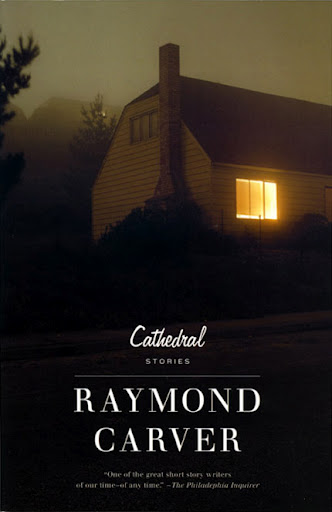
I don’t often find myself holding such deep empathy for characters as I did while reading a selection of Raymond Carver’s stories in Cathedral. The man was brilliant at capturing the human condition with stripped-down language and few words. He animated the ordinary and mundane; uninteresting people suddenly become complicated and intriguing characters on the page fueled by such strong emotions as loneliness, resentment, and grief.

As suspense continued to climb through each story, I kept wondering what a particular character was going to do next. In the story “Preservation,” I was waiting for the wife to snap in response to her depressed husband who spent three months on the couch after losing his job. I really thought at one point she was contemplating violence, yet, it’s never once suggested in the words on the page. Anger and frustration are portrayed through her actions and observations of her husband’s despondency, but it’s between the lines and paragraph breaks where her violent thoughts reside.

The underlying emotions and mental states in Carver’s stories are incredibly real, yet only touched upon in the words themselves, if at all, like the clichéd iceberg analogy I won’t bother to recite, you’ve heard it more than once. Likewise, I found similar empathetic responses in other stories, particularly the heavy grief-weighted sadness of “A Small, Good Thing.” It would not surprise me if this story had a reputation of drawing tears from readers. The fright of two parents coping with their severely injured child in the hospital and the unknown outcome is not an easy one to portray. This story left me in a somber mood; there was a lot to rationalize and digest.

So now, my self-imposed challenge is to accomplish at least half this reaction from readers of my own stories.